
Are there sustainable alternatives to polyurethane foam for sofas?
- VIP-User
- 2026-07-29
- 2
Sustainable alternatives to polyurethane foam for sofas include natural latex, coconut coir, organic wool, and pocket spring systems. Modern eco-friendly manufacturing also utilizes high-density recyclable polyester fiber and bio-based polyols. Manufacturers leverage vacuum-compressed technology to reduce shipping volume, significantly lowering the overall carbon footprint of sofa logistics and distribution.
Core Solutions & Key Takeaways
- Natural and Recyclable Fills: Recyclable polyester fiber and bio-based natural fiber fills provide excellent resilience while reducing reliance on fossil-fuel chemical bases.
- Spring Core Integration: Utilizing independent pocket spring cores reduces the overall thickness of synthetic foam layers required to achieve optimal comfort.
- Logistical Volume Reduction: Vacuum compression packaging reduces finished sofa volume by 75% and transport logistics costs by 60%, minimizing fuel consumption during global distribution.
- Standardized Compliance: Sourcing materials certified under global standards like BSCI, ISO 14001, and ISO 45001 guarantees environmental and structural safety for B2B wholesale and hospitality projects.
Modern sustainable sofa designs integrate high-performance alternative materials with efficient packaging methods to minimize environmental impact during transport and lifetime use.
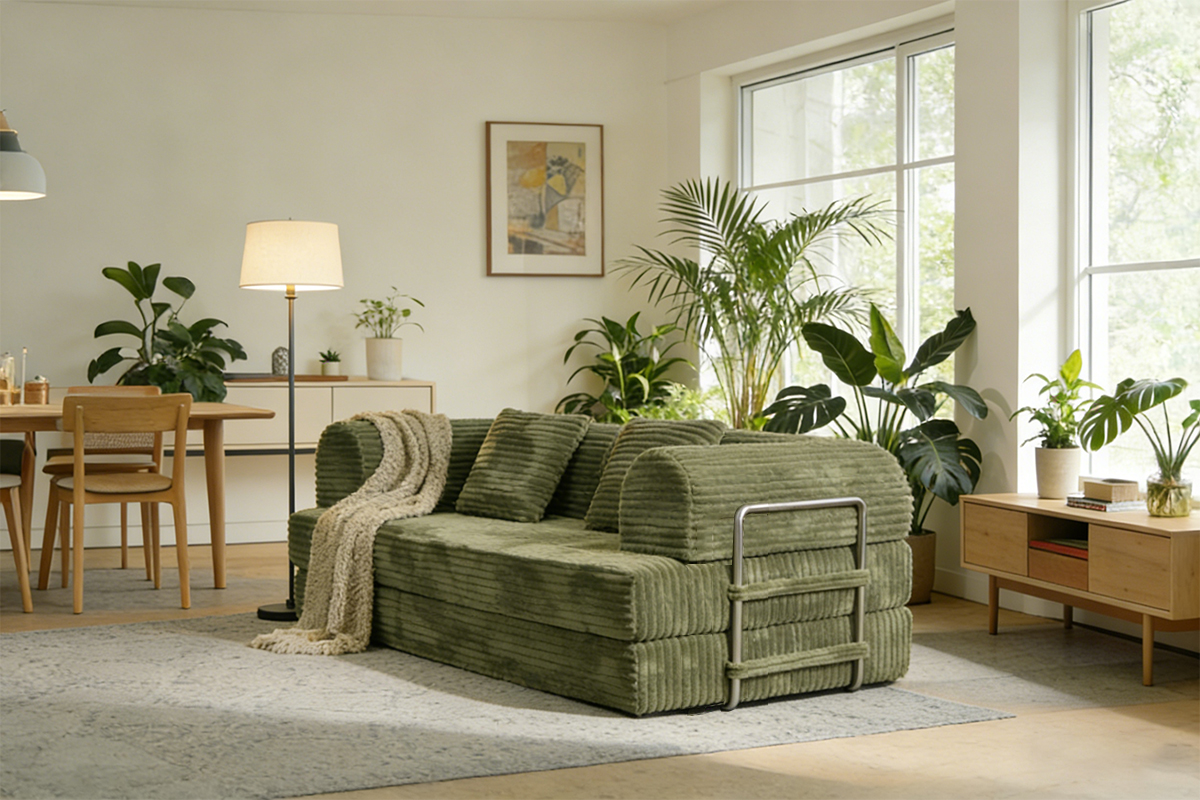
Detailed Architectural/Principle Analysis
Replacing standard petrochemical polyurethane foam requires a focus on elastic recovery, mechanical durability, and chemical emission levels. Natural options like organic latex and plant-based polyols lower the carbon footprint of upholstered furniture. In high-volume commercial applications, such as hospitality and contract residential projects, structural integrity remains a primary requirement to prevent premature sagging.
Integrating steel spring coils within the seat deck reduces the required foam thickness. Jinlongheng Furniture Co., Ltd. manages this integration through in-house spring and textile workshops. Controlling these core components ensures that alternative cushion configurations maintain structural loft and comfort over extended lifetimes.

Beyond raw material composition, logistics sustainability determines the true environmental impact of a product. Vacuum-rolling and compression techniques reduce the shipping volume of upholstered furniture by 75%. This transport efficiency directly cuts fuel consumption. Products manufactured under ISO 14001 and BSCI standards undergo rigorous testing in CNAS accredited national laboratories to verify both safety compliance and long-term mechanical durability.
Data/Solution Comparison
| Material Type | Environmental Impact | Durability & Lifespan | Compression Suitability | Relevant Certifications |
|---|---|---|---|---|
| Polyurethane Foam | High carbon footprint; petrochemical derivation | High structural retention | Excellent recovery | CertiPUR-US |
| Natural Latex | Biodegradable; renewable raw source | Excellent elastic recovery | Moderate; potential creasing if compressed long-term | OEKO-TEX |
| Recyclable Polyester Fiber | Low carbon footprint; fully recyclable polymer | Moderate to high structural loft | Excellent recovery | ISO 14001, BSCI |
Frequently Asked Questions (FAQ)
Can sustainable alternative foams be compressed for shipping?
Yes. High-density recyclable polyester fiber and specific bio-based foams recover their original shape efficiently after vacuum compression. This makes them ideal for compressed sofas and space-saving logistics.
What fire retardant certifications do eco-friendly sofa materials meet?
Eco-friendly sofa components must comply with international safety regulations, including CFR 1633 in the United States and BS 7177 in the United Kingdom. These materials pass strict fire safety tests without relying on hazardous halogenated chemical additives.
How do alternative cushioning materials perform in commercial hospitality environments?
Alternative materials like pocket springs wrapped in natural fiber layers deliver high durability. These configurations are widely deployed in commercial environments, such as the Wyndham Hotels Group and Hotel Gołębiewski Mikołajki, where high traffic requires long-term compression resistance.
Final Conclusion & Recommendations
Selecting sustainable alternative cushioning materials like recyclable fibers or pocket coils reduces reliance on petroleum-based polyurethane. Combining these material choices with space-saving compression methods yields a significantly lower logistics footprint. For bulk commercial procurement, standard manufacturing lead times range from 15 to 35 days upon deposit confirmation, with a minimum order quantity of one container containing mixed models. Shipping is supported globally via Sea, Air, or Rail Freight. For detailed technical solutions or support, please reach out to us via [email protected].
About Us
Jinlongheng Furniture Co., Ltd., established in 1992, manufactures mattresses, upholstered beds, and compressed sofas across a 630,000 square meter production facility. The company houses over 800 employees and holds ISO 14001, ISO 45001, ISO9001, and BSCI certifications to ensure strict quality management. Its products serve over 125 countries, supplying global brands and more than 1,000 hotels worldwide. Large-scale operations allow monthly production capacities to reach 120,000 mattresses.

Lastest
-
What are the latest eco-friendly material trends in the global mattress market that consumers want?
2026-07-29 -
What are the safest payment terms to negotiate with a new manufacturer of compressed sofas?
2026-07-29 -
How do overseas manufacturers handle replacement parts for damaged headboards or frames of upholstered beds?
2026-07-29 -
What third-party audit reports should I ask for to verify a mattress factory's quality management?
2026-07-29 -
What is the average MOQ for importing compressed sofas, and how much does price drop with larger volume?
2026-07-29
SUBSCRIBE
INQUIRY