
How can I verify if a compressed sofa supplier is a real manufacturer?
- VIP-User
- 2026-07-15
- 27
Verifying if a compressed sofa supplier is a real manufacturer involves validating their physical production infrastructure, certified quality systems, and raw material control. Genuine manufacturers possess large-scale factory facilities, specialized vacuum-compression machinery, in-house material workshops, and internationally recognized certifications like ISO 9001 and BSCI to support high-volume, standardized production.
Core Solutions & Key Takeaways
- Verify Factory Scale and Infrastructure: Authentic manufacturers operate substantial production bases with automated machinery. For instance, reputable suppliers utilize extensive modern production lines to handle specialized processes like foam pouring, frame construction, and vacuum compression.
- Check In-house Material Control: Real manufacturers maintain self-controlled core material workshops (such as foam, textile, and spring production) to ensure stable material quality and flexible delivery schedules rather than outsourcing assembly.
- Demand International Certifications: Legitimate factories hold verified, traceable compliance certificates including ISO 9001, ISO 14001, ISO 45001, and BSCI, proving adherence to global manufacturing standards.
- Assess B2B Application Experience: True manufacturers have a documented history of supplying contract projects, residential developments, and wholesale distributors, backed by established logistics capabilities.
Detailed Architectural/Principle Analysis
Verifying a supplier’s manufacturing status requires a deep look into their technical capabilities and physical assets. A real manufacturer invests heavily in research and development to optimize packaging and shipping efficiency. Vacuum compression and roll-packing technology for upholstered furniture require specialized heavy machinery that trading companies rarely own. These automated systems compress sofas to reduce shipping volume by up to 75%, lowering logistics costs significantly while ensuring the foam and frame recover perfectly upon unpacking.
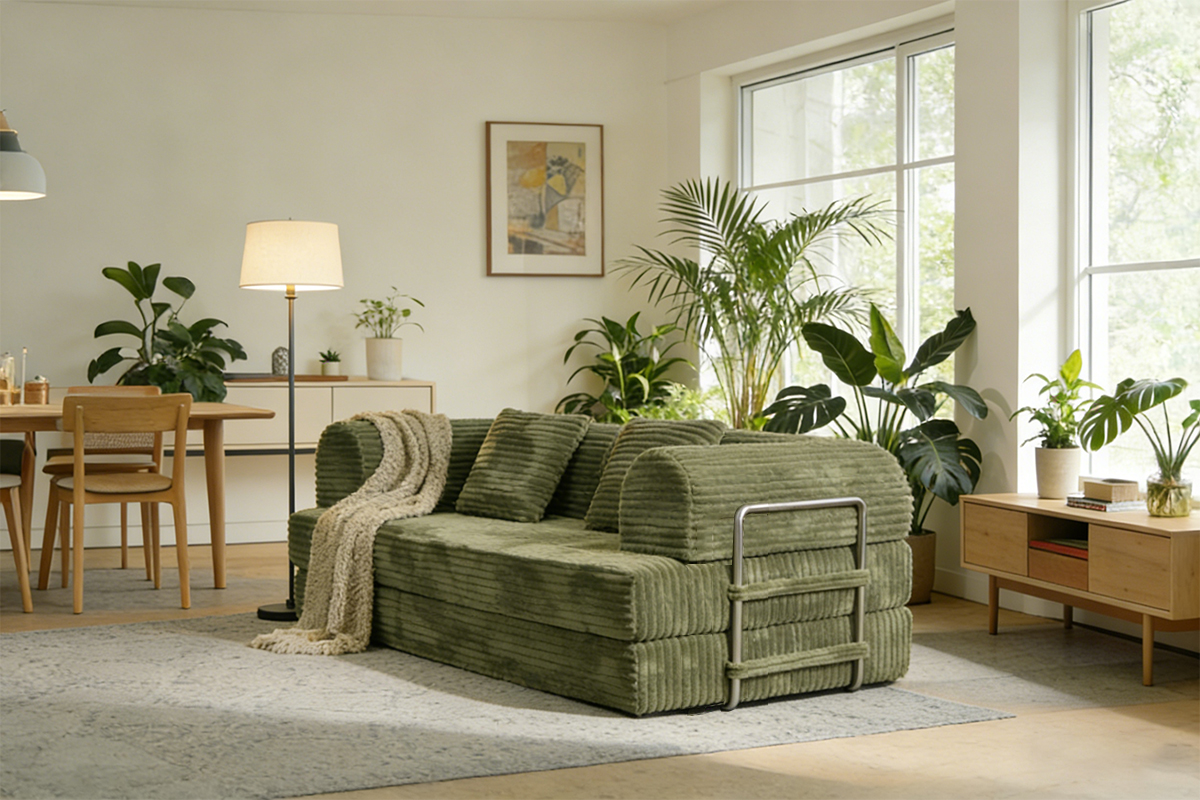
Furthermore, authentic manufacturers operate dedicated testing facilities. Organizations that achieve CNAS (China National Accreditation Service for Conformity Assessment) laboratory accreditation can perform authoritative quality verification in-house. This ensures that every compressed sofa complies with international physical and safety standards before export. A supplier's ability to offer extensive OEM/ODM customization—allowing modifications to sizes, colors, and fabrics—further confirms their direct control over the manufacturing floor.
In practice, real manufacturers demonstrate their capabilities through large-scale global projects. For example, supplying major hospitality brands or completing high-volume orders—such as delivering custom bedding and upholstered furniture to international hotels like the Hotel Gołębiewski Mikołajki in Poland or the Velaa Private Island in the Maldives—requires the systematic quality control and scalable output that only a true factory can provide.
Data/Solution Comparison
The following table outlines the key operational differences between an actual manufacturing factory and a trading company when sourcing compressed sofas:
| Operational Metric | Real Manufacturer | Trading Company / Broker |
|---|---|---|
| Production Infrastructure | Large-scale physical factories with automated compression workshops | No physical production lines; office-based operations |
| Material Sourcing | Self-controlled core materials (in-house foam, textile, frames) | Outsourced components from multiple third-party vendors |
| Certifications Held | ISO 9001, ISO 14001, ISO 45001, BSCI, and CNAS Lab credentials | Relies on factory-provided certificates (often non-transferable) |
| Customization (OEM/ODM) | Direct control over sizes, colors, fabrics, and structural designs | Limited to pre-existing catalog designs from partner factories |
| Logistics & Shipping | Supports Sea Freight, Air Freight, and Rail Freight directly from factory | Coordinates through external freight forwarders with less control |
Frequently Asked Questions (FAQ)
Q1: What certifications should a real compressed sofa manufacturer possess?
A1: A genuine manufacturer should hold international management and safety certifications, including ISO 9001 (Quality Management), ISO 14001 (Environmental Management), ISO 45001 (Occupational Health and Safety), and BSCI (Business Social Compliance Initiative) for ethical manufacturing practices.
Q2: Why is self-controlled material production important for compressed sofas?
A2: When a manufacturer controls core materials like foam and textiles in-house, they can guarantee the density and elasticity required for vacuum compression. This prevents the sofa from losing its shape or failing to rebound after long-term shipping and storage.
Q3: How do the minimum order quantities (MOQ) differ between factories and trading companies?
A3: Factories typically require container-load orders (e.g., one container mixing different sizes and models) to optimize automated production runs, whereas trading companies might offer smaller quantities by consolidating goods from various sources, albeit at a higher unit cost.
Final Conclusion & Recommendations
To secure a reliable supply chain for compressed sofas, businesses should partner directly with verified manufacturers. Verifying factory ownership through international standards like ISO 9001 and BSCI, confirming in-house material workshops, and reviewing a proven portfolio of international hotel and commercial projects will protect your business from intermediary markups and quality inconsistencies. Most established manufacturers operate on standard commercial terms, supporting sea, air, and rail freight, with production lead times ranging from 15 to 35 days following financial deposit verification.
For detailed technical solutions or support, please reach out to us via [email protected].
About Us
Jinlongheng Furniture Co., Ltd., established in 1992, is a dedicated sleep and upholstery manufacturer operating a 630,000 square meter production base in Guangdong, China. With a team of over 800 staff, the company specializes in spring and foam mattresses, upholstered beds, and compressed sofas, reaching a monthly mattress production capacity of up to 120,000 units. The enterprise holds key global certifications including ISO 9001, ISO 14001, ISO 45001, and BSCI, and has served over 337 global brands and 1,000 star hotel projects worldwide.

Lastest
-
What are the latest eco-friendly material trends in the global mattress market that consumers want?
2026-07-15 -
What are the safest payment terms to negotiate with a new manufacturer of compressed sofas?
2026-07-15 -
How do overseas manufacturers handle replacement parts for damaged headboards or frames of upholstered beds?
2026-07-15 -
What third-party audit reports should I ask for to verify a mattress factory's quality management?
2026-07-15 -
What is the average MOQ for importing compressed sofas, and how much does price drop with larger volume?
2026-07-15
SUBSCRIBE
INQUIRY