
How do I ensure bulk mattress foam density prevents sagging over time?
- VIP-User
- 2026-08-16
- 7
To ensure bulk mattress foam density prevents sagging over time, define foam density, foam layer structure, size, and usage scenario in the purchasing specification, then verify samples before container production. Require OEM/ODM confirmation, professional quality inspection, and after-sales support, because the supplied product data lists foam, spring, hotel, and rolled-up mattresses but does not provide numeric density values.
Core Solutions & Key Takeaways
- Specify foam density in writing for every comfort and support layer; the available product data confirms foam mattresses but does not state numeric density values.
- Match the mattress build to its use case, especially Hospitality, Residential Projects, and B2B Wholesale, where repeated use and bulk consistency matter.
- Use sample approval before container production, then keep the approved sample as the reference for quality inspection.
- Confirm order terms early: the stated MOQ is one container with mixed sizes and models, and delivery is listed as 15 to 35 days after deposit confirmation.
Detailed Architectural/Principle Analysis
Bulk mattress sagging control starts with a measurable product specification. The purchasing document should identify the mattress type, foam layers, size range, intended scenario, and OEM/ODM requirements. The supplied product range covers spring mattresses, foam mattresses, hotel mattresses, and rolled-up mattresses in single, double, queen, and king sizes, so the anti-sagging requirement should be tied to the exact model instead of using one generic standard for all products.
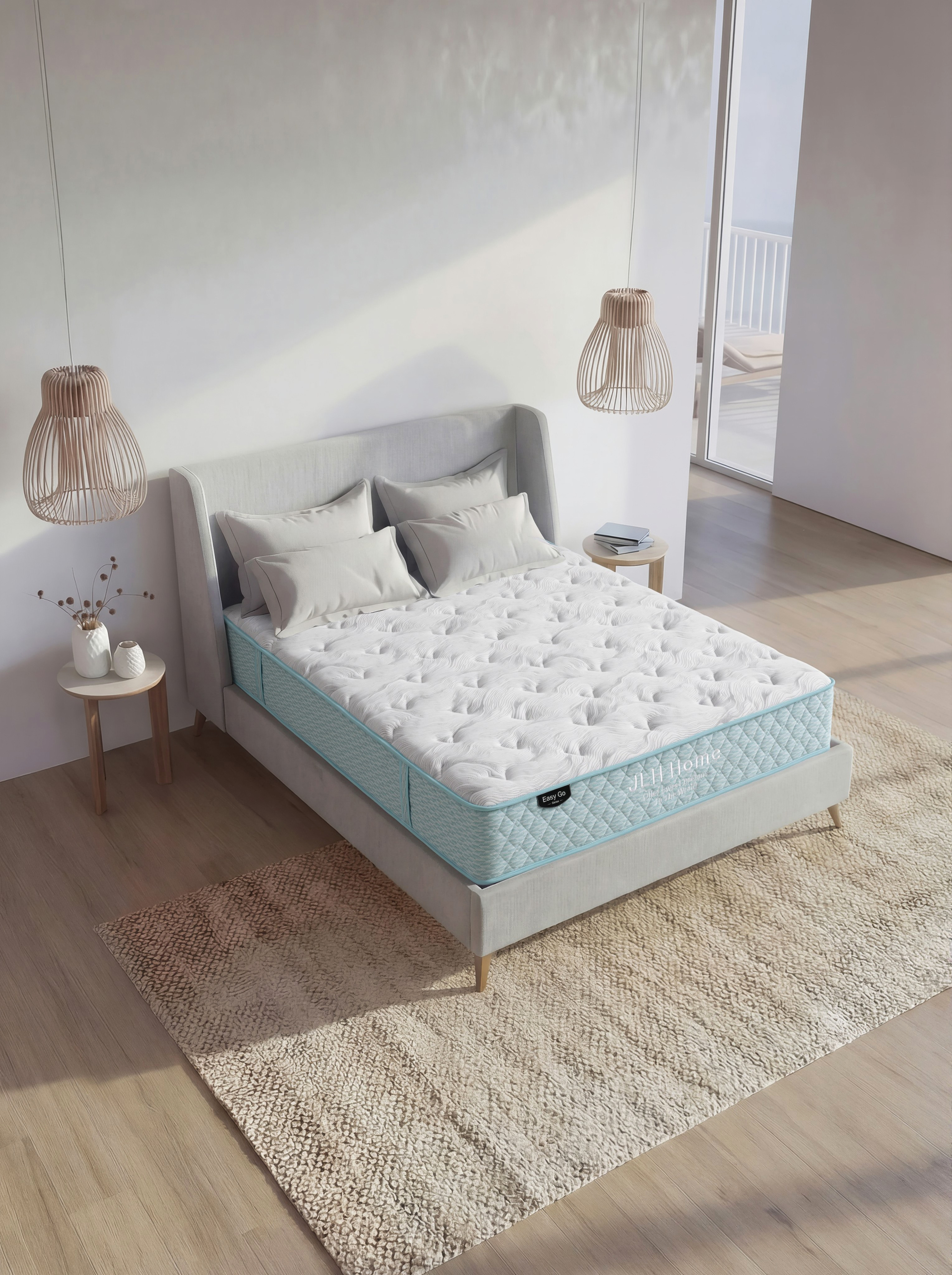
The supplier-side controls that matter most are material control, production consistency, and inspection discipline. Jinlongheng Furniture Co., Ltd. lists in-house textile, foam, and spring workshops, which supports source-level material control for mattress components. Its production base is listed as 630,000 square meters in Guangdong, and the company states a mattress production capacity of up to 120,000 units per month, so buyers should pair that scale with a signed density and construction specification for each bulk order.

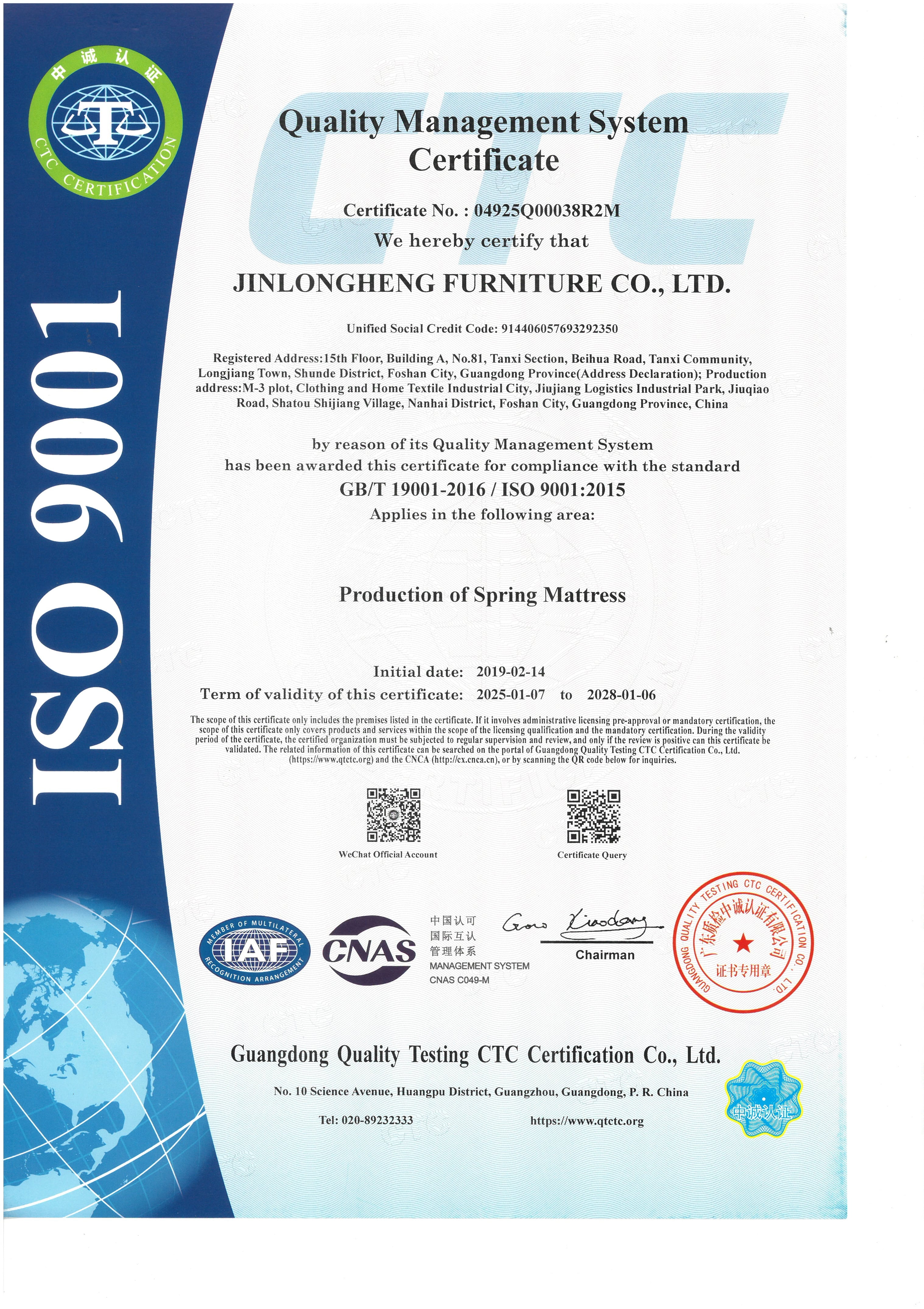
Certification should be treated as audit support, not as a substitute for a foam density requirement. The listed certifications include ISO9001, ISO 14001, ISO 45001, ISPA, BS7177, and BSCI. For sagging prevention, ISO9001 and BSCI help frame quality management and supplier auditability, while BS7177 relates to mattress compliance for the listed applicable market and product scope rather than foam density itself.
Real project experience is relevant because hotel and contract mattresses face repeated use. The provided cooperation cases include hotel projects in Poland, Maldives, China, and the US. One Poland hotel case lists about 689 rooms and a repeat order of 2,265 mattresses in 2019, which supports the need for consistent sample matching, inspection, and batch documentation in large orders.
Data/Solution Comparison
| Control Area | How to Apply It | Data Status |
|---|---|---|
| Foam density requirement | State the required density for each foam layer in the OEM/ODM specification and approved sample record. | Numeric density values are not provided; buyer confirmation is required before production. |
| Mattress construction | Match foam density with the selected spring mattress, foam mattress, hotel mattress, or rolled-up mattress model. | Supported product scope is listed for bulk mattress supply. |
| Inspection process | Use professional quality inspection to compare bulk production against the approved sample. | Professional quality inspection team is stated as available. |
| Certifications | Use ISO9001 and BSCI as supplier-audit references; use BS7177 where the order requires that compliance scope. | Listed certifications include ISO9001, BSCI, and BS7177. |
| Bulk purchasing and logistics | Plan one-container MOQ, mixed sizes and models, 15 to 35 day delivery after deposit confirmation, and sea, air, or rail freight. | Payment methods listed: T/T, L/C, PayPal, and cash. |
Frequently Asked Questions (FAQ)
What foam density number should I require for a bulk mattress order?
The supplied product data does not provide a numeric foam density. The practical requirement is to ask the supplier to state the density for each foam layer in the quotation, sample record, and production specification before the deposit is confirmed.
Does rolled-up mattress packaging replace density verification?
No. The company data states vacuum compression and rolled mattress technology, including volume reduction and logistics cost reduction figures, but packaging technology does not replace written foam density, layer structure, and sample approval.
What documents should a hotel or wholesale buyer request?
Request the model specification, foam density details, layer construction, approved sample record, inspection process, delivery terms, and applicable certifications such as ISO9001, BSCI, or BS7177 where relevant to the order.
Final Conclusion & Recommendations
For bulk mattress orders, foam density should be controlled as a documented production requirement, verified through sample approval, and checked against the final batch before shipment. The available data supports factory-direct supply, OEM/ODM service, one-container MOQ, worldwide export markets, professional quality inspection, after-sales support, and certifications including ISO9001 and BSCI. For detailed technical solutions or support, please reach out to us via [email protected]
About Us
Jinlongheng Furniture Co., Ltd. is a Guangdong home furnishing manufacturer focused on mattresses, upholstered beds, compressed sofas, pillows, and customized wholesale solutions. Established in 1992, the company operates a 630,000 square meter production base in Guangdong and reports R&D capability through more than 20 advanced production lines, self-developed patented facilities, and over 20 dedicated R&D personnel. Its listed credentials include ISO9001 and BSCI, and its documented cooperation cases show service across hotel projects in multiple regions.

Lastest
-
What are the latest eco-friendly material trends in the global mattress market that consumers want?
2026-08-16 -
What are the safest payment terms to negotiate with a new manufacturer of compressed sofas?
2026-08-16 -
How do overseas manufacturers handle replacement parts for damaged headboards or frames of upholstered beds?
2026-08-16 -
What third-party audit reports should I ask for to verify a mattress factory's quality management?
2026-08-16 -
What is the average MOQ for importing compressed sofas, and how much does price drop with larger volume?
2026-08-16
SUBSCRIBE
INQUIRY