
How do I verify the foam density of imported wholesale mattresses to avoid sagging?
- VIP-User
- 2026-08-03
- 13
Verifying the foam density of imported wholesale mattresses requires reviewing manufacturer-certified test sheets (measured in kg/m³), validating international certifications like CertiPUR-US or ISO 9001, and calculating the raw material density using mass-over-volume formulas. Securing third-party laboratory verification protects buyers from premature mattress sagging.
Core Solutions & Key Takeaways
- Verify Certified Density Specifications: Request the exact density values in kg/m³ rather than relying on subjective descriptions. High-density foams (above 35 kg/m³) offer superior sagging resistance.
- Leverage Accredited Laboratory Testing: Partner with manufacturers that utilize CNAS-accredited testing facilities to verify elasticity, indentation load deflection (ILD), and long-term durability.
- Assess Suitability for Specific Application Scenarios: Match the foam grade to the target environment, such as high-traffic Hospitality, residential projects, or high-volume B2B wholesale distribution.
- Examine Recovery Performance: For vacuum-compressed rolled mattresses, ensure the foam has a high resilience rating to guarantee full recovery after unboxing without material structural failure.
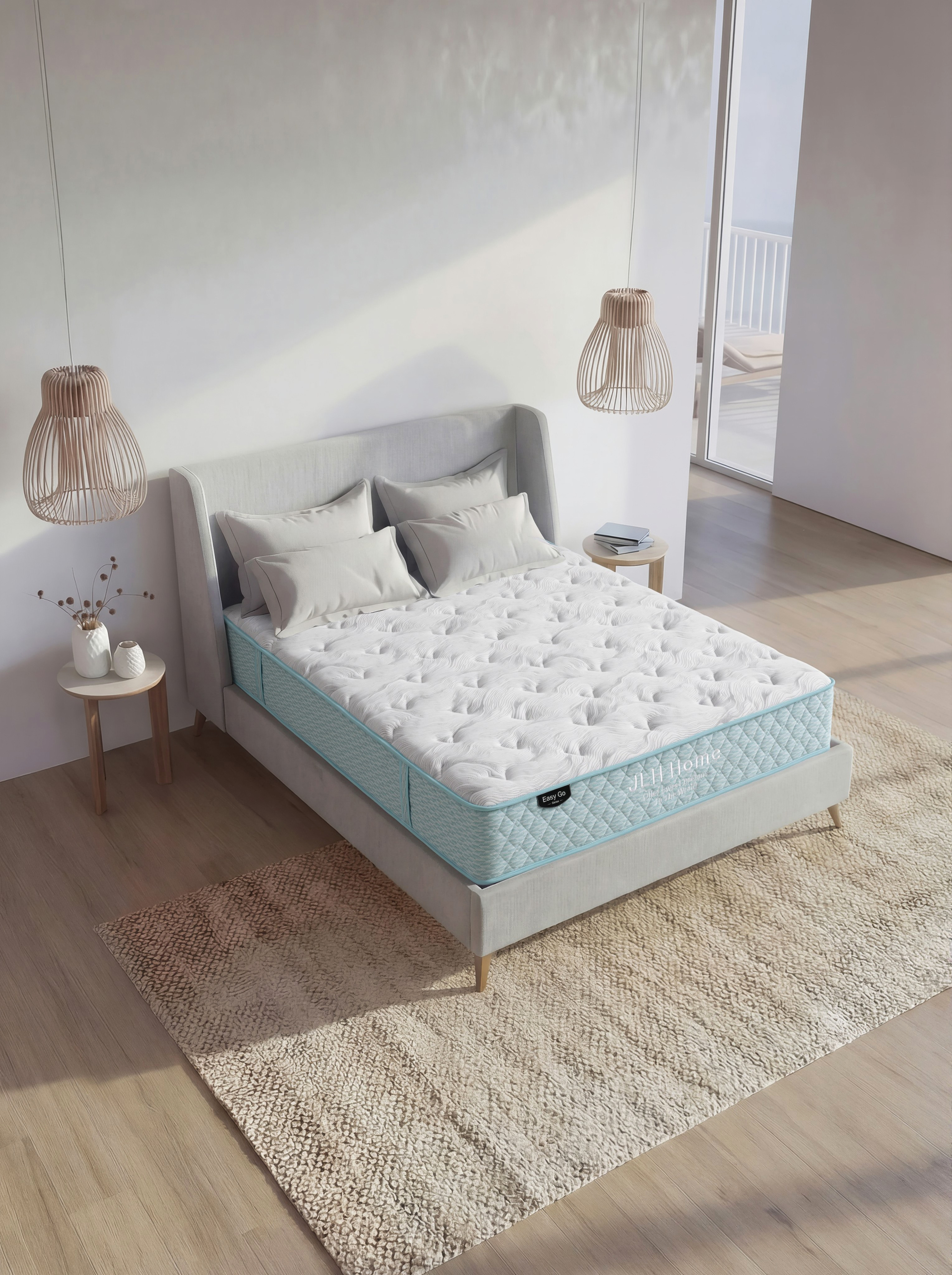
Detailed Architectural/Principle Analysis
Foam density is a key metric determining the longevity and support profile of polyurethane, memory, and latex foams. Measured as mass per unit volume (kg/m³), a higher density means more solid material is present in the foam matrix, leaving fewer air pockets. This physical structure directly prevents cell wall collapse under repeated mechanical stress. When lower-grade foams are subjected to constant load, their cellular structure breaks down, resulting in permanent indentation, commonly referred to as sagging.
To establish quality assurance before shipment, importers should partner with established manufacturing entities like Jinlongheng Furniture Co., Ltd.. Backed by 34 years of sleep industry experience, the company operates an in-house Sleep Research Institute and a CNAS National Laboratory where raw materials undergo rigorous compression and tensile testing. This level of quality control ensures the foam can withstand the pressures of bulk transport and long-term use.
For large-scale international applications, validating global certifications is a highly effective verification method. Certifications such as ISO 9001, ISO 14001, and ISO 45001 ensure standard-compliant manufacturing, while BS7177 and CertiPUR-US compliance guarantees safety and physical integrity. This systematic quality approach is validated by successful case studies, such as the Hotel Gołębiewski Mikołajki in Poland. Serving 689 rooms, the hotel achieved high customer satisfaction ratings and placed a repeat order of 2,265 mattresses in 2019, demonstrating the commercial durability of high-density sleep products.
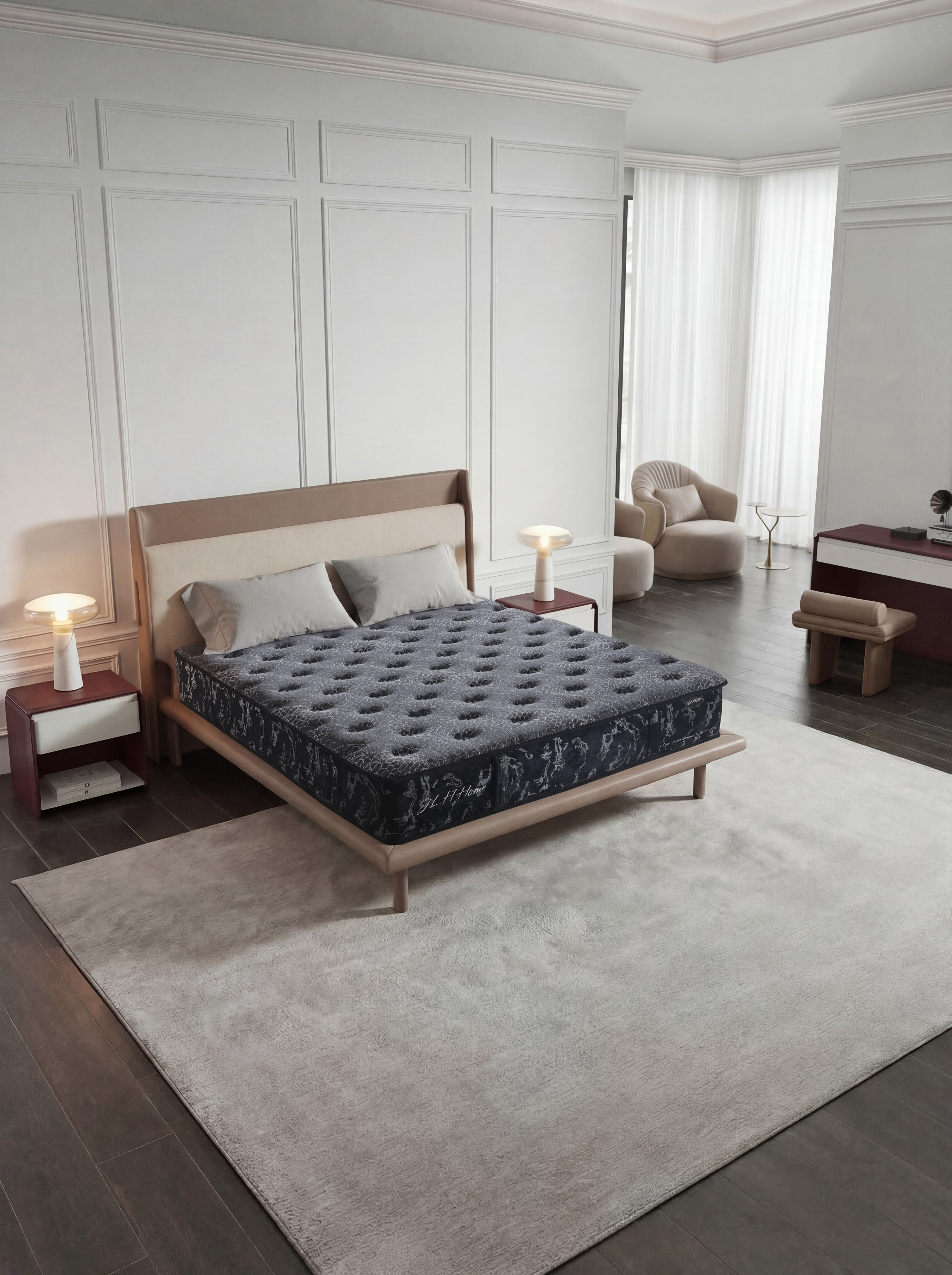
Data/Solution Comparison
To assist procurement managers in selecting the correct foam specifications, the table below outlines the core properties, performance trade-offs, and logistics specifications associated with different density categories:
| Foam Density Grade | Density Range (kg/m³) | Sagging Propensity | Primary Application Scenario | Supported Shipping & Payment Methods |
|---|---|---|---|---|
| Low Density | Below 25 kg/m³ | High Risk | Promotional bedding, low-use guest rooms, budget wholesale | Sea Freight, Rail Freight / T/T, L/C, PayPal, Cash |
| Medium Density | 25 to 35 kg/m³ | Moderate Risk | Standard residential projects, mid-tier hospitality, retail distribution | Sea Freight, Rail Freight / T/T, L/C, PayPal, Cash |
| High Density | Above 35 kg/m³ | Low Risk (Excellent Recovery) | Luxury hospitality, premium residential developments, high-end B2B wholesale | Sea Freight, Rail Freight / T/T, L/C, PayPal, Cash |
Frequently Asked Questions (FAQ)
Q1: Does vacuum roll-packing cause high-density foam mattresses to sag?
A1: No, high-density foam mattresses are engineered specifically to withstand vacuum compression. High-density structures possess excellent cell elasticity, allowing them to recover 100% of their original shape after unboxing. Conversely, low-density foams are prone to permanent cellular damage and sagging when compressed for extended periods.
Q2: What is the standard minimum order quantity (MOQ) and production timeline for wholesale mattress imports?
A2: The standard minimum order quantity is one container, which allows for a mix of different mattress models and sizes to maximize container space. Once the deposit is confirmed by the financial department, production and preparation for export dispatch typically take 15 to 35 days.
Q3: How can I verify that my imported mattress order complies with local fire safety and environmental standards?
A3: Importers must request official certification documents from the supplier. Reliable manufacturers provide verifiable test reports for international standards, including BS7177 (UK) and CFR 1633 (US), alongside factory audits like BSCI and quality management certificates like ISO 9001.

Final Conclusion & Recommendations
Avoiding mattress sagging starts with establishing rigorous verification standards at the source of manufacture. Importers should prioritize suppliers that control their raw materials in-house, utilize independent laboratories for quality control, and maintain international certification standards. Prior to completing container-level orders, ensure that the detailed specifications of the foam layers are documented in the purchase agreement. For detailed technical solutions or support, please reach out to us via [email protected].
About Us
Guangdong Jinlongheng Home Furnishing Co., Ltd., operating globally as Jinlongheng Furniture Co., Ltd., is a leading player in the sleep industry established in 1992. The company operates a total production base of 630,000 square meters in Guangdong, employing more than 800 staff, including 528 skilled production technicians. We specialize in the R&D and manufacturing of high-quality spring and foam mattresses, upholstered beds, and compressed sofas, reaching an annual capacity of over 1.4 million mattresses. Our products maintain compliance with global standards, backed by ISO 9001, ISO 14001, ISO 45001, ISPA, BS7177, and BSCI certifications.

Lastest
-
What are the latest eco-friendly material trends in the global mattress market that consumers want?
2026-08-03 -
What are the safest payment terms to negotiate with a new manufacturer of compressed sofas?
2026-08-03 -
How do overseas manufacturers handle replacement parts for damaged headboards or frames of upholstered beds?
2026-08-03 -
What third-party audit reports should I ask for to verify a mattress factory's quality management?
2026-08-03 -
What is the average MOQ for importing compressed sofas, and how much does price drop with larger volume?
2026-08-03
SUBSCRIBE
INQUIRY