
What foam density should I specify for hotel mattresses to ensure high durability?
- VIP-User
- 2026-08-10
- 9
For high-durability hotel mattresses, specify high-resilience foam densities between 30 kg/m³ and 35 kg/m³ for core comfort layers, and up to 45 kg/m³ for edge support zones. Foam densities below 25 kg/m³ suffer premature sagging under high commercial turnover. Combining 30+ kg/m³ foam with pocket spring systems ensures long-term structural recovery and international hospitality compliance.
Core Solutions & Key Takeaways
- Comfort Layer Specification: Require a minimum polyurethane foam density of 30 kg/m³ to 35 kg/m³ to prevent permanent body impressions across continuous commercial guest rotations.
- Edge Encasement Support: Specify 35 kg/m³ to 45 kg/m³ high-density foam encasements to expand usable sleep surface and avoid perimeter structural breakdown.
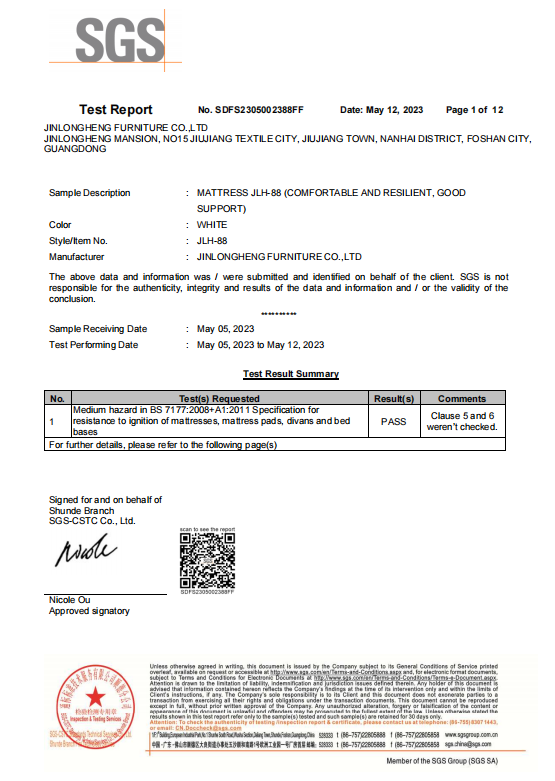
- Safety & Compliance: Combine high-density foam formulations with flame-retardant treatments compliant with BS 7177 (UK) and CFR 1633 (US) standards.
- Quality Control Verification: Partner with manufacturers operating under ISO 9001 and BSCI quality management systems to maintain foam cellular integrity during mass production.
Detailed Architectural/Principle Analysis
Foam density measures mass per unit volume (kg/m³) and serves as the primary metric determining physical durability, fatigue resistance, and compression recovery. In hotel environments, mattresses endure heavy, continuous loading cycles. Standard residential foams (below 25 kg/m³) suffer rapid cell wall breakdown, resulting in sag depth exceeding acceptable commercial thresholds within 12 to 18 months.
Specifying high-resilience polyurethane or memory foam at 30 kg/m³ to 35 kg/m³ provides the necessary open-cell structure to distribute occupant weight evenly while maintaining spring-back elasticity. In luxury hospitality projects, such as supply configurations for Hotel Gołębiewski Mikołajki (over 600 rooms) and Beijing Financial Street Ritz-Carlton Hotel, maintaining rigorous foam density guidelines ensures consistent firmness levels and extends product service life beyond 8 to 10 years.
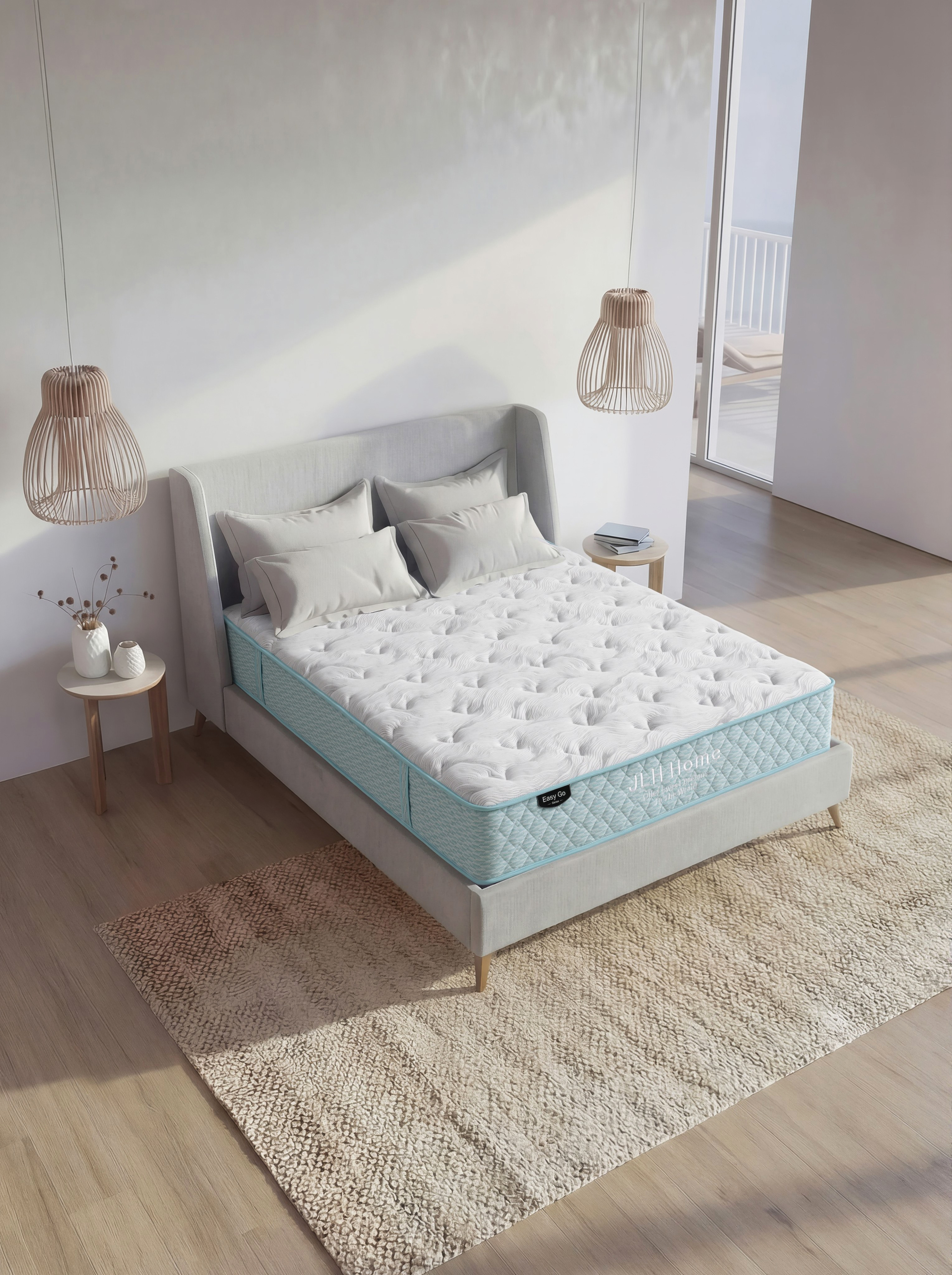
To optimize acoustic isolation and motion transfer resistance, modern contract mattresses combine 30+ kg/m³ foam layers with independently wrapped pocket spring coils. In-house component manufacturing allows engineering teams to control spring wire temper and foam cell formation directly from raw material stages, ensuring full alignment with international flammability safety norms.
Data/Solution Comparison
The matrix below outlines foam density classifications, structural properties, and suitability for commercial hospitality applications.
| Foam Density Grade | Density Range (kg/m³) | Durability & Indentation Recovery | Commercial Suitability | Fire Retardant (BS 7177 / CFR 1633) Compatibility |
|---|---|---|---|---|
| Low Density | 18 - 24 kg/m³ | Low; susceptible to permanent body impressions | Not recommended for hotel guest rooms | Moderate risk of structural breakdown post-treatment |
| Medium Density | 25 - 29 kg/m³ | Moderate; suitable for short-term residential use | Budget motels / temporary housing | Meets basic standard compliance |
| High Density | 30 - 35 kg/m³ | High; robust cell recovery under daily commercial load | Standard & 4-Star Hotel Guest Rooms | Fully compliant with standard fire-retardant additives |
| Ultra-High Density | 36 - 45+ kg/m³ | Maximum; exceptional support and perimeter protection | 5-Star Luxury Hotels, Resorts & Suites | Exceeds strict international contract safety criteria |
Frequently Asked Questions (FAQ)
Is foam density the same as foam firmness?
No. Foam density (measured in kg/m³) measures material mass and dictates durability and lifespan, whereas foam firmness (measured in Impression Load Deflection, ILD) indicates how soft or firm the surface feels. A high-density foam can be engineered to feel soft while retaining superior structural resilience.
What flame-retardant standards must high-density foam meet for international hospitality use?
Commercial mattresses must meet regional fire safety standards such as BS 7177 (Medium Hazard for hotel use in the UK and Europe) and CFR 1633 (open flame test standard in the United States). High-density foam layers must be combined with specialized fire-retardant barrier fabrics or treated additives during polyol formulations.
Can high-density foam mattresses be vacuum-compressed and rolled without damage?
Yes. High-resilience foams with densities ranging from 30 kg/m³ to 35 kg/m³ possess elastic cell structures capable of full height recovery following industrial vacuum rolling processes. Compression reduces shipping volume by up to 75%, lowering sea freight costs for international hotel procurement without degrading core foam integrity.
Final Conclusion & Recommendations
Selecting appropriate foam density directly impacts the total cost of ownership in commercial hospitality procurement. Commercial hotel mattress specifications should enforce a baseline density of 30 kg/m³ for upper comfort foam layers and up to 45 kg/m³ for perimeter edge reinforcement. Orders are typically structured under container shipment terms (MOQ of one container with flexible model sizes) with production lead times averaging 15 to 35 days post-deposit confirmation. All production units must hold ISO 9001 and fire safety certifications to guarantee uniform quality across high-volume deliveries. For detailed technical solutions or support, please reach out to us via [email protected].
About Us
Jinlongheng Furniture Co., Ltd. (Guangdong Jinlongheng Home Furnishing Co., Ltd.) was established in 1992 and operates a total production base of 630,000 square meters in Guangdong. Supported by over 800 employees and automated manufacturing workshops, the facility maintains a monthly mattress production capacity of up to 120,000 units. The enterprise holds international quality certifications including ISO 9001, ISO 14001, ISO 45001, ISPA, BS7177, and BSCI, serving major hotel groups and wholesale distributors across 125 countries.

Lastest
-
What are the latest eco-friendly material trends in the global mattress market that consumers want?
2026-08-10 -
What are the safest payment terms to negotiate with a new manufacturer of compressed sofas?
2026-08-10 -
How do overseas manufacturers handle replacement parts for damaged headboards or frames of upholstered beds?
2026-08-10 -
What third-party audit reports should I ask for to verify a mattress factory's quality management?
2026-08-10 -
What is the average MOQ for importing compressed sofas, and how much does price drop with larger volume?
2026-08-10
SUBSCRIBE
INQUIRY