
What quality control processes do you use during mattress assembly?
- VIP-User
- 2026-07-22
- 14
During mattress assembly, quality control processes include rigorous raw material testing, high-precision automated spring and foam integration, strict fire safety compliance checks, and final vacuum-compression testing. Every mattress undergoes standardized structural and durability inspections in a CNAS national laboratory to ensure compliance with global standards before packaging and shipping.
Core Solutions & Key Takeaways
- In-House Material Quality Control: Manufacturing core components, including textile fabrics, foam, and pocket springs, in dedicated workshops ensures total quality control from the source.
- International Fire Safety Standards: Every mattress assembly complies with global fire-retardant certifications, such as CFR 1633 for the United States and BS 7177 for the United Kingdom.
- Accredited Laboratory Verification: Products undergo physical durability, load-bearing, and material safety tests in an in-house CNAS National Laboratory backed by annual R&D investments.
- Vacuum-Compression Recovery Checks: Specialized testing ensures rolled-up mattress assemblies maintain structural resilience and recover fully after a 75% volume reduction during compression.
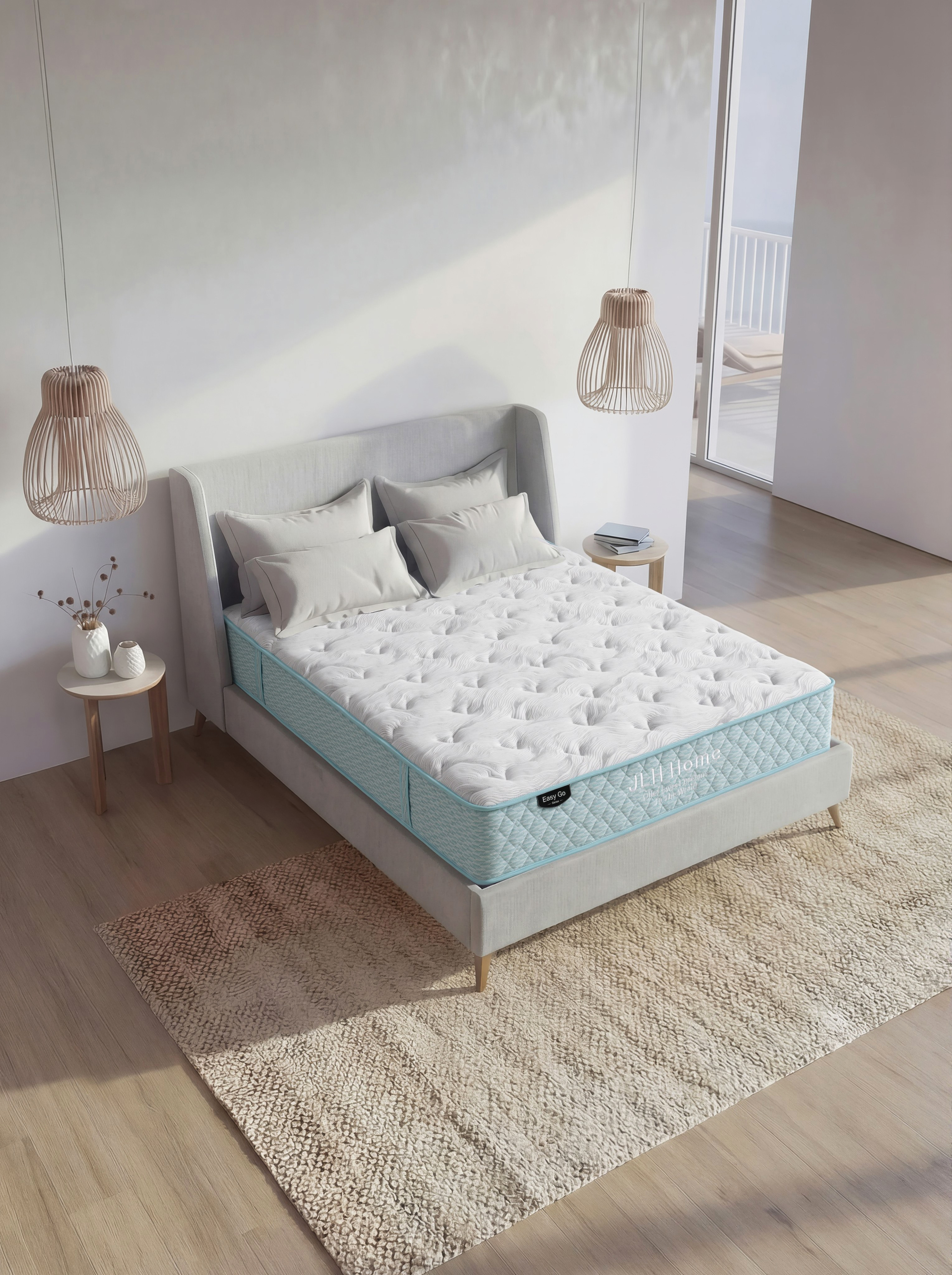
Detailed Architectural/Principle Analysis
Ensuring the structural integrity of a mattress requires a multi-stage quality control system that monitors the product from raw materials to final packaging. Since Jinlongheng Furniture Co., Ltd. controls its own spring, textile, and foam production workshops, components are verified for performance metrics before the assembly process begins. Pocket springs are tested for tensile strength and fatigue resistance, while foam layers undergo density and deflection testing.
During the core assembly phase, automated manufacturing systems align the spring units with the foam encasement and comfort layers. This automated process minimizes manual alignment errors, ensuring consistent border support and preventing edge sagging. Specialized eco-friendly adhesives are applied uniformly, and the assembled layers undergo immediate bonding checks. This level of precision is critical for products designed for high-traffic environments, such as luxury hotels and commercial residential projects.

Safety compliance is verified through rigorous fire-retardant testing in the Sleep Research Institute's CNAS accredited laboratory. Representatives from each production batch are subjected to open-flame and smolder tests matching international standards. Finally, for rolled-up mattress models, the completed assembly is tested under extreme vacuum pressure. This verification ensures that the steel coils and foam layers can withstand high-pressure rolling and rebound to their original thickness without deformation when unpacked by the end user.
Data/Solution Comparison
| Quality Control Stage | Key Process Parameters | Target Product Types | Applicable Global Standards |
|---|---|---|---|
| Material Testing | Spring tensile strength, foam density, fabric hygiene | Spring mattress, foam mattress, bedding pillow | ISO 9001, OEKO-TEX, CertiPUR-US |
| Structural Assembly | Automated coil alignment, border reinforcement, adhesive bonding | Hotel mattress, upholstered bed | ISPA, BSCI |
| Safety and Durability | Open-flame resistance, cyclical load-bearing simulation | Hotel mattress, residential mattress | CFR 1633 (US), BS 7177 (UK), CNAS |
| Packaging Inspection | Vacuum seal retention, 75% volume compression tolerance | Rolled-up mattress, compressed sofa | ISO 14001, export logistics standards |
Frequently Asked Questions (FAQ)
Question: How do you verify that compressed rolled-up mattresses return to their original shape?
Answer: Every compression-molded batch undergoes strict testing where mattresses are vacuum-packed, rolled, and stored. Samples are regularly opened to monitor the exact rebound time and ensure that the foam layers and pocket springs recover 100% of their designated height and support level without physical compromise.
Question: What specific fire safety certifications do your assembled mattresses hold?
Answer: The assembled mattresses are engineered and tested to meet major international fire-retardant standards. This includes full compliance with BS 7177 for the United Kingdom and global markets, as well as CFR 1633 flammability testing for the United States market.
Question: Why is in-house component manufacturing important for mattress quality?
Answer: Producing springs, textiles, and foam in-house eliminates reliance on third-party suppliers. This allows direct monitoring of material specifications, ensures consistent quality across large manufacturing batches, and maintains stable lead times for wholesale and custom OEM/ODM orders.
Final Conclusion & Recommendations
Implementing structured, multi-phase quality control during mattress assembly ensures long-term comfort, structural durability, and international safety compliance. By combining raw material self-control with testing inside an accredited CNAS National Laboratory, the entire manufacturing cycle remains reliable and traceable. As a direct factory and manufacturer, we support global B2B procurement with a minimum order quantity (MOQ) of one container, accommodating mixed sizes and models. Standard delivery times range from 15 to 35 days upon financial deposit confirmation, with full sea, air, and rail freight logistics support. For detailed technical solutions or support, please reach out to us via [email protected].
About Us
Jinlongheng Furniture Co., Ltd., established in 1992, operates a total production base of 630,000 square meters in Guangdong and employs a dedicated team of over 800 staff, including 528 skilled production technicians. The company specializes in the research, design, and large-scale manufacturing of spring and foam mattresses, upholstered beds, compressed sofas, and customized pillows, with a monthly mattress capacity of 120,000 units. The facility holds prestigious global quality credentials, including ISO 9001, ISO 14001, ISO 45001, BSCI, BS 7177, and ISPA certifications. Serving over 337 global brands and 1,000 hotel projects, the company has completed major international hospitality installations such as the Maldives Vela Private Island Resort and the Beijing Financial Street Ritz-Carlton Hotel.

Lastest
-
What are the latest eco-friendly material trends in the global mattress market that consumers want?
2026-07-22 -
What are the safest payment terms to negotiate with a new manufacturer of compressed sofas?
2026-07-22 -
How do overseas manufacturers handle replacement parts for damaged headboards or frames of upholstered beds?
2026-07-22 -
What third-party audit reports should I ask for to verify a mattress factory's quality management?
2026-07-22 -
What is the average MOQ for importing compressed sofas, and how much does price drop with larger volume?
2026-07-22
SUBSCRIBE
INQUIRY